Where to Sell Hockey Cards for the Most Money
Selling hockey cards well comes down to one decision: how much of the market price are you willing to trade away for speed and convenience? Every venue sits somewhere on that line. This guide compares them with real numbers, and the calculator below shows exactly what you’d keep from each.
Before any of it: know what your cards are worth first. The values guide covers that process, and nothing in this post works without it. Sellers who know their solds negotiate; sellers who don’t get educated at their own expense.
Key Takeaways
- eBay nets you the most on most cards: expect roughly 87% of the sale price after fees.
- Card shops pay 50-70% of market, and that discount buys instant cash with zero effort.
- High-end cards deserve consignment or an auction house, where reach beats the commission.
- Junk-era bulk is not worth selling card by card: lot it, shop it, or gift it.
Table of Contents
What You Actually Keep, by Venue
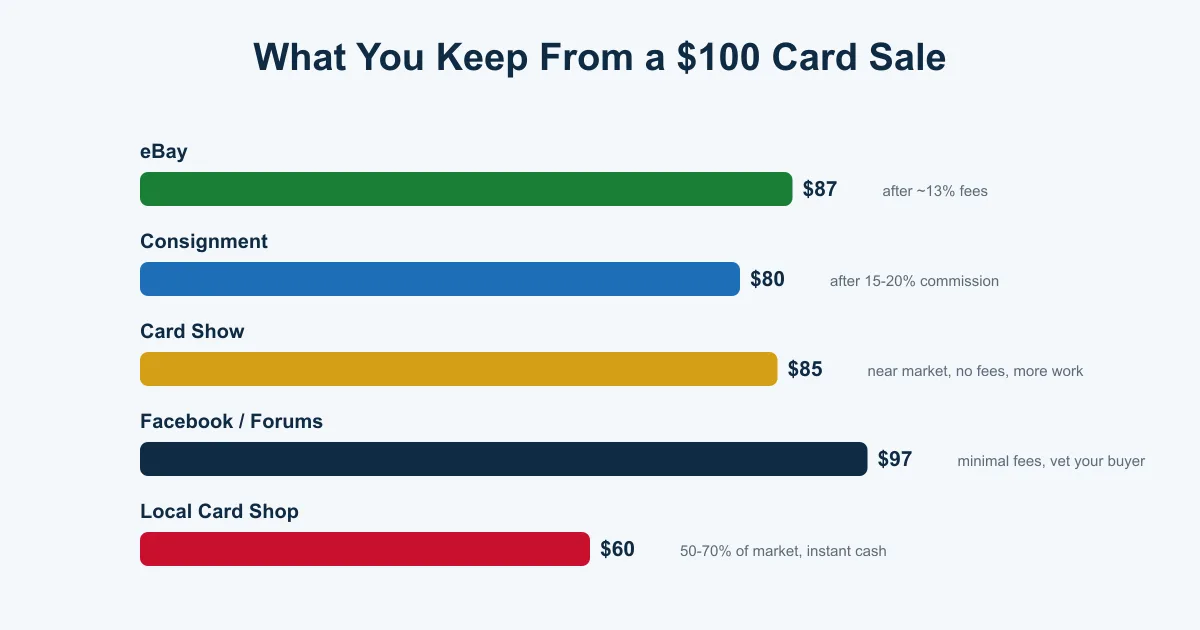
The pattern: the venues that pay the most demand the most work (photography, listing, shipping, buyer questions), and the venue that demands nothing pays the least. None of these are wrong; they’re different trades of money for effort. Match the venue to the card:
- $1-20 cards: not worth selling individually anywhere. Lot them or let the shop take them with a collection.
- $20-500 cards: eBay’s sweet spot. The fee buys you the deepest buyer pool in the hobby.
- $500+ cards: consider consignment or an auction house; presentation and reach start beating fee savings.
- Anything, today, no effort: the card shop, at the shop’s price.
Net Payout Calculator
What Would You Keep?
Enter a card's market value (recent sold price) and compare your realistic net at each venue.
Selling on eBay the Right Way
Most sellers leave money on the table with lazy listings. The fixes are cheap:
- Title like a search query. Year, set, player, card number, grade: “1986 O-Pee-Chee Patrick Roy Rookie #53 PSA 9”. Buyers find cards through search, and that’s exactly how they search.
- Photograph front and back, corners close. Honest photos prevent returns and build the trust that wins best offers. Blurry photos read as hiding something, because they usually are.
- Price from solds, then choose format. Fixed price with Best Offer for most cards; auction only when demand is deep and current (hot rookies, fresh news hype).
- Know the fee before listing. Check eBay’s current selling fees so the net doesn’t surprise you; ~13% is the planning number.
Selling to a Card Shop
The shop quote stings until you understand it. The shop pays 50-70% of what it can actually resell cards for, funds your cash today, carries the inventory risk, and does all the work. That’s a fair service with a real price.
Get the most from it:
- Sort before you go. Shops pay better for organized, valuable cards than for a tote of mystery. Pull your stars and rookies using the triage method.
- Know your top cards’ solds. You don’t need to out-negotiate anyone; you just need to recognize a fair number when you hear it.
- Expect zero for junk-era bulk. The shop can’t sell it either. That’s the market talking, not the shop.
Consignment and Auction Houses
For genuinely valuable cards, reach beats fees. Consignment services list, photograph, and ship for a commission, and their audiences pay up for grail-tier cards in ways a self-listed auction can’t match. Major auction houses like Heritage Auctions handle the top of the market and regularly set the records this hobby talks about.
Rule of thumb: once a card clears four figures, get consignment quotes before self-listing, and once it’s a true grail, the auction house conversation is mandatory. The commission on a stronger price usually beats keeping all of a weaker one.
Timing the Sale
Venue picks the fee; timing picks the price. Card markets swing with the hockey calendar, and the same card can sell for meaningfully different numbers in June and October.
- Sell into attention. Playoff runs, awards, milestone chases, and trade deadlines spike demand for the players involved. A hot streak is a selling window, and the news feed is a decent radar for what the hobby is talking about.
- Check the trend line first. A card’s price history on Card Ladder shows whether you’re selling into strength or into a slide. Selling a falling card “next month instead” has cost me real money more than once.
- Season matters. Hockey card demand runs strongest from the season opener through the playoffs and quietest in late summer. Nothing dramatic, but if you’re indifferent on timing, listing in-season beats listing in August.
- Don’t overthink cheap cards. Timing games are for cards worth real money. A $30 card goes up for sale when you feel like listing it.
Shipping Sold Cards Safely
The sale isn’t done until the card arrives safely, and one crushed corner refunds the whole transaction.
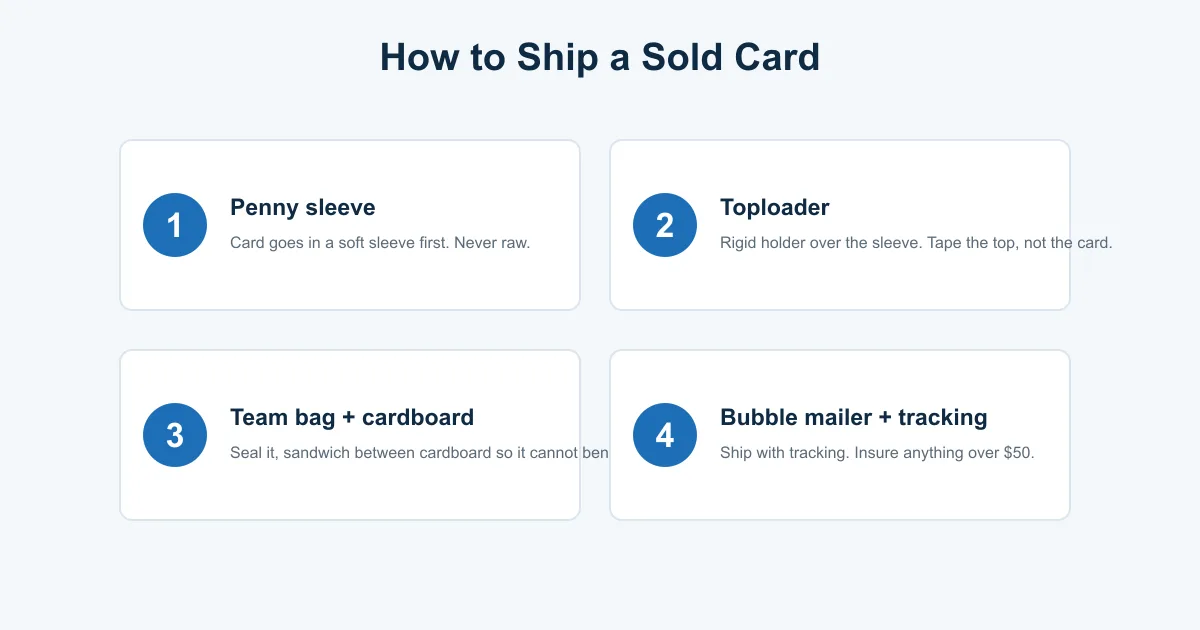
The standard that never fails: penny sleeve, toploader taped at the top (never touching the card), sandwiched in a team bag with cardboard stiffeners, into a bubble mailer with tracking. Insure anything over $50. Cheap out on any step and the hobby’s shipping gods will find you.
Sell the winners, enjoy the rest, and when the proceeds inevitably turn into more cards, at least you’ll know where to buy them right.
Fees and payout percentages are planning estimates as of July 2026 and change over time. Not financial advice.
Frequently Asked Questions
Where can I sell my hockey cards?
eBay reaches the most buyers and pays closest to market after fees. Local card shops pay 50 to 70 percent of market but pay today. Consignment services and auction houses suit high-end cards, and Facebook groups avoid fees if you vet buyers.
How much do card shops pay for collections?
Expect 50 to 70 percent of realistic market value on cards the shop can actually resell, and close to nothing for junk wax era bulk. That discount is the price of instant cash and zero effort, not the shop ripping you off.
What is the best way to sell cards online?
For most cards, eBay with clear photos, an accurate title (year, set, player, number, grade), and a price anchored to recent sold listings. High-end cards often do better through consignment or a major auction house.
Should I grade my cards before selling?
Only when the expected graded price meaningfully beats the raw price plus the grading fee. Run the numbers with the grading ROI calculator in our values guide before submitting anything.